More Than Maintenance: Caregiving as Invisible Infrastructure

Updated: Mar 3
Caregiving is often framed as private work.
Family work.
Domestic work.
Relational work.
But this framing obscures something essential.
Caregiving is not marginal labor.
It is infrastructural labor.
It sustains lives, yes, but it also sustains the systems that depend on those lives remaining stable, physically and mentally supported, legally protected, socially connected, and able to participate in the world.
Without caregiving labor, multiple societal systems would begin to fracture under strain:
Healthcare systems.
Disability systems.
Elder care systems.
Educational systems.
Family systems.
Caregiving operates below visibility thresholds, but society runs on it.

The Skilled Nature of Caregiving
Caregiving is often treated as unskilled labor.
But that assumption collapses under scrutiny.
Many caregivers bring extensive professional backgrounds into this work, backgrounds that do not disappear when they leave formal employment.
In my own case, I hold a graduate degree in psychology, a teaching credential in special education, and professional experience in case management and behavioral support.
Those skills did not vanish when I stepped into caregiving.
They came with me.
They shape how I:
Coordinate medical care.
Track developmental and behavioral data.
Communicate with physicians and specialists.
Navigate legal and educational systems.
Recognize neurological and regulatory patterns.
Manage crisis situations.
Caregiving, in this context, becomes applied interdisciplinary work, drawing from psychology, education, medicine, advocacy, and systems navigation.
And yet, it is rarely compensated as such.
Invisible Authority, Visible Responsibility
There is a paradox embedded in caregiving labor.
Professional and academic backgrounds do not disappear when individuals step into caregiving roles.
In my own case, training in psychology, education, and case management continues to shape how I navigate medical, legal, and service systems.
I notice a distinct shift when professionals are aware of that background.
Conversations change.
Information flows differently.
Planning becomes more collaborative.
The knowledge translates.
Yet the positional designation of “caregiver” does not carry that same structural recognition on its own.
Authority becomes situationally visible, rather than inherently acknowledged.
So authority is present…
…but structurally invisible.
It is systemic design.
Caregiving authority is situationally acknowledged but economically unrecognized.
Functional Language vs Lived Care
Systems often describe caregiving through tasks defined by functional language:
Feeding.
Transporting.
Supervising.
Housing.
This language is operationally useful for documentation and policy tracking.
But it is also reductional.
Because caregiving is not simply the execution of tasks.
It is the facilitation of lived experience.
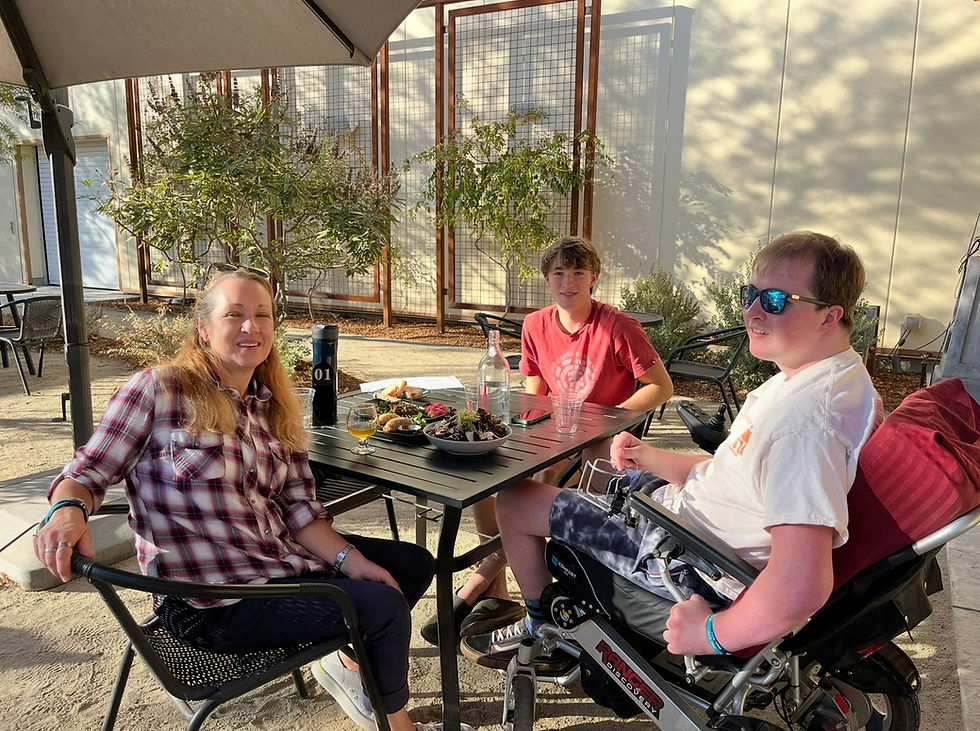
I do not “feed.”
I create meals.
Dinner with family.
Atmosphere.
Conversation.
Taste.
Belonging.
Because nourishment is not only physical, it is emotional, relational, and psychological.
The difference between “feeding” and “dinner” is not semantic.
It is developmental.
Feeding sustains biological survival.
Dinner sustains lived life.
Without lived nourishment, decline accelerates, cognitively, emotionally, and socially.
Beyond Transportation
I do not simply transport.
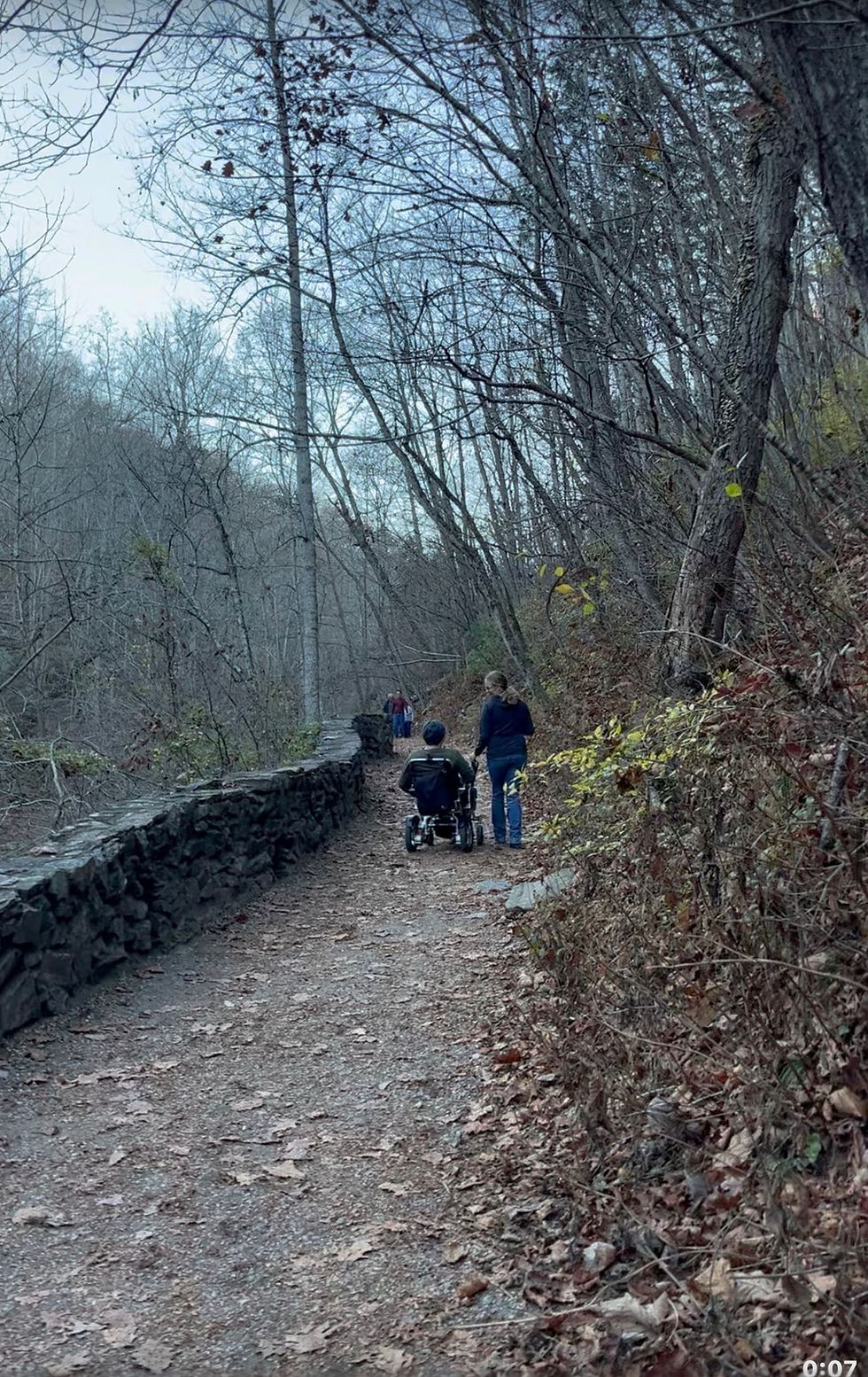
We go do life.
We go to lunch, not just eat.
We sit by the water.
Watch people.
Ride bikes.
Travel.
Participate in public spaces.
Transportation, in caregiving language, is functional.
Experience, in lived reality, is participatory.
One sustains logistics.
The other sustains personhood.
Knowing vs Supervising
I do not supervise.
I know.
Supervision implies oversight.
Knowing implies relationship.
Caregiving requires attunement to regulation shifts, emotional states, cognitive rhythms, physical thresholds.
This is skilled relational labor, not passive observation.
Why Recognition Structures Lag
This invisibility is not always rooted in neglect.
Policy systems require trackable language.
Documentation must be measurable.
Funding models depend on functional categories.
Policymakers often operate far from lived caregiving environments.
They build frameworks based on administrative clarity, not experiential immersion.
So caregiving becomes documented in distilled functional terms.
Necessary for systems.
But incomplete for reality.
The Compensation Gap
In most professional sectors, compensation scales with:
Education.
Experience.
Specialization.
Skill complexity.
Teaching does.
Healthcare does.
Social services do.
Caregiving, despite requiring overlapping competencies often does not.
There is rarely a structured salary scale reflecting:
Academic background.
Case complexity.
Medical coordination demands.
Behavioral expertise.
Legal advocacy load.
Yet the societal impact of this labor is profound.
Caregiving stabilizes lives, and reduces long-term systemic costs across healthcare, housing, and social services.
Recognition and compensation structures have not caught up to the infrastructural reality of the work.
A Societal Foundation
Caregiving is often framed as moral obligation.
An act of love.
A family responsibility.
And, it is those things.
But it is also societal infrastructure.
Assuming families will absorb this labor invisibly, without structural recognition or adequate compensation is not sustainable long-term policy design.
As populations age and disability complexity increases, caregiving demand rises.
If caregiving labor destabilizes…
Healthcare strain increases.
Institutionalization rises.
Costs escalate.
Family systems fracture.
Caregiving is not peripheral to societal stability.
It is foundational to it.
Naming What Has Been Unseen
This essay is not an argument against love-driven care.
It is an argument for structural visibility.
Caregiving is skilled labor.
Relational labor.
Regulatory labor.
Systems-navigation labor.
Developmental labor.
It sustains lives, and the systems that depend on those lives continuing to participate.
It is time to name caregiving not as private sacrifice…
…but as public infrastructure operating inside family systems.
Because what remains invisible…
remains undervalued.
And what remains undervalued…
remains structurally unsupported.
Caregiving is not maintenance work.
It is life-sustaining infrastructure, lived out in homes, communities, and public spaces every day, often without broader societal recognition.



Comments