The Maze: Living Inside Complex Grief

Updated: Feb 10
Caregiving, Ambiguous Loss, and Learning to Keep Going
There are seasons when life continues outwardly as usual, yet the way the world is experienced begins to shift.
Conversations still happen. Dogs are still walked. Neighbors still say “good morning.” Children still laugh nearby. From the outside, life appears functional. But internally, the ground underneath everyday life begins to move.
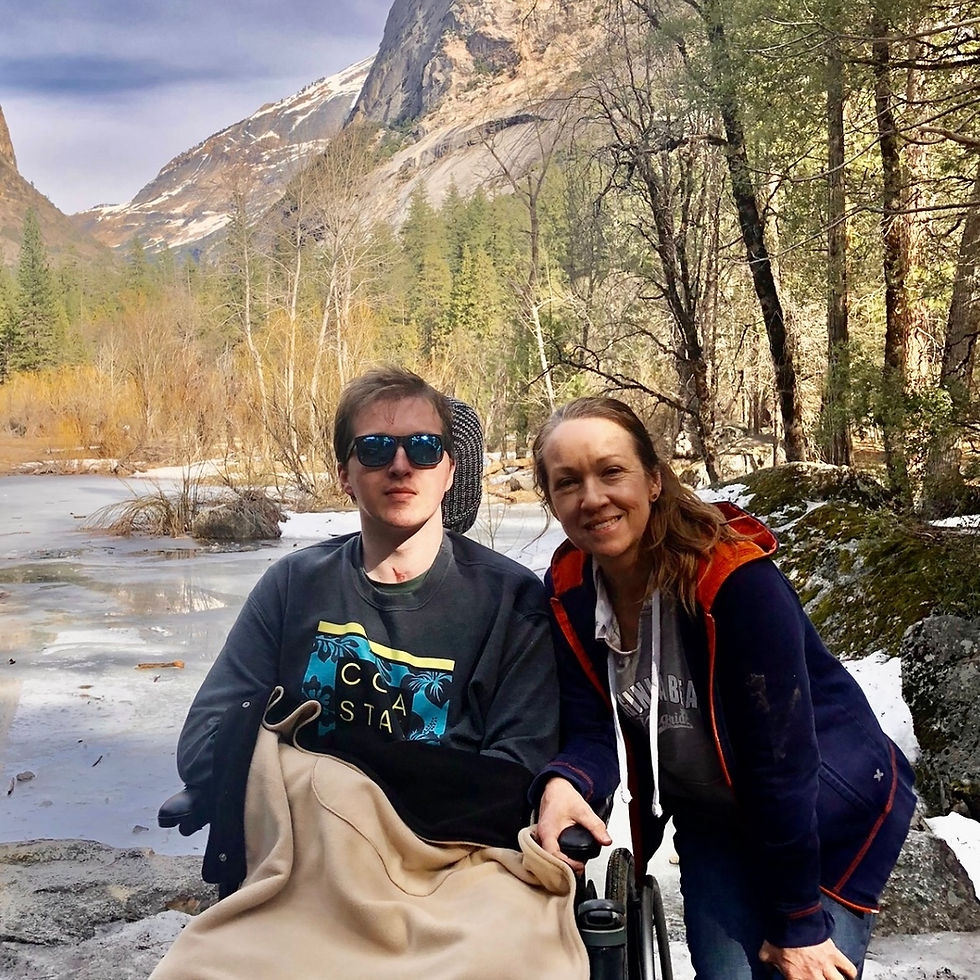
My son’s brain injury did not come with resolution or a clear path forward. There was no timeline to orient by. No defined “after this.” What replaced certainty was ongoing ambiguity that demanded daily attention.
That kind of loss doesn’t just bring sadness. It changes the shape of everyday living.
Slowly, it became clear that caregiving after life-altering loss often places people inside a different lived reality than those around them.
That’s when the maze became the best way I could describe it.
Not as a metaphor I chose but as the shape of what I was living.

It felt like looking through fog while trying to navigate a huge maze.
I could still see the world outside the walls. People moving through their routines. Walking their dogs. Taking their kids to school. Living inside the familiar routines. I could hear them. Sometimes I spoke with them. But I was no longer living where they were.
Inside the maze, life operates differently.
It is rarely one problem at a time. Instead, many paths intersect at once. Medical decisions without clear outcomes. Insurance systems. Legal processes. Caregiving schedules. Family strain. Mental health fatigue. Financial pressure. Faith questions. An unknown future pressing in from every direction.
This is territory many people enter when grief becomes complex. When love remains present, responsibilities continue, and clarity never fully arrives. Complex grief doesn’t pause life. It rearranges it.
Inside, life becomes about navigating, adapting, and carrying daily needs.
Losses don’t arrive neatly spaced out. They stack. Work becomes impossible or harder to sustain. Income shifts. Housing less stable. Roles change quickly. What once felt permanent becomes provisional.
Life inside the maze doesn’t behave the same way. Some days are slow and heavy. Other days disappear entirely. There are stretches where the edges feel lighter and then a turn comes and the weight returns. There are winding paths, and sharp corners. Places where you pause. Places where you keep moving without knowing exactly what you’re moving toward.
Often, you don’t even know what you’re searching for. You’re just trying to keep going. Trying to keep people safe. Trying to hold what matters together.
Caregiving deepens this experience. When you are navigating the maze on behalf of another person, it becomes the landscape of daily life.
Family life shifts here too. Children move through grief on different paths. Sometimes those paths cross and you stop, talk, pause, maybe hug, and then walk on. Roles change quickly. Middle children become oldest children overnight. Responsibilities redistribute without ceremony. Relationships reorganize in real time.
Inside the maze and outside are two different worlds.
They operate on different structures. Different expectations. Different barriers. Even different experiences of time. Outside, life continues forward along familiar routes. Inside, life becomes about learning, adjusting, and holding care in motion.
For a long while, many people live almost entirely inside this maze.

Inside the maze, the boundaries between personal life and caregiving blur.
There are calls to make. Appointments to attend. Paperwork. Follow-ups. Systems to learn. Rules to navigate. Decisions that don’t wait for emotional readiness or workable clarity.
For those living inside complex grief, this becomes familiar. Not easy, but lived. You learn how to function while uncertainty remains present. You learn how to carry what must be carried even when the future is unclear.
This is where isolation often grows.
Not always because people leave, but because it becomes harder to explain the reality you are living in. Conversations begin to happen across different lived realities.
Sometimes people on the outside don’t realize there are two realities operating at once. They see the surface. You’re still showing up, still functioning, still moving. What they don’t see is the constant recalibration underneath. The quiet labor of holding, adjusting, deciding, continuing.
Identity shifts here as well.
What once defined a person may no longer fit cleanly. New roles appear. New labels emerge. Expectations multiply. You begin to recognize that grief doesn’t only take things away. It reorganizes who you are becoming.
And through all of this, grief remains present.
Not always loud. Sometimes quiet. Sometimes heavy. Sometimes lighter at the edges. But persistent. It becomes part of the atmosphere you breathe.
This is why complex grief feels different from the outside. There is no clear ending point to work toward. No final chapter that signals closure. Instead, there is ongoing adaptation. Ongoing navigation. Ongoing learning the landscape.
And slowly, often without a clear turning point, a new rhythm begins.

At first, the movement outward is small.
You don’t leave the maze. You step to the edge of it. You sit on the bench. You watch. You listen. You let yourself notice everyday life again without really entering it. Then you return inside.
Later, you walk a little farther. You say hello to people passing by. You stay for a short conversation. You let yourself participate in small, ordinary moments. Then you return again.
This isn’t about will. It’s about capacity.
It happens as the maze becomes more familiar. As its turns and harder stretches become known. As rhythms, even difficult ones begin to take shape.
Even when you step outside the maze, caregiving changes how you move through life.
What changes is not certainty, but sufficiency.
Enough clarity to make the next decision.
Enough steadiness to stay present.
Enough trust to keep moving.
Enough courage to hold what must be held.
Enough peace to rest when possible.
Enough connection to remain human.
Not perfect understanding. Not total resolution. Just enough to move between worlds.
I no longer know a life without grief.
But I’m learning how to live a life that can hold it.
And I know that others are learning how to walk this way too.
Quietly, imperfectly, steadily finding their own way through the maze, even when the path is still forming beneath them.



Well written. I had this journey after a major accident, followed by the loss of my younger brother at 44. Stay strong!